Tire repair in Abbotsford: when a puncture can be fixed
A nail in the tread is often repairable. A cut in the sidewall isn't. Here's how to tell, what a proper repair involves and what to do if it happens on Highway 1.
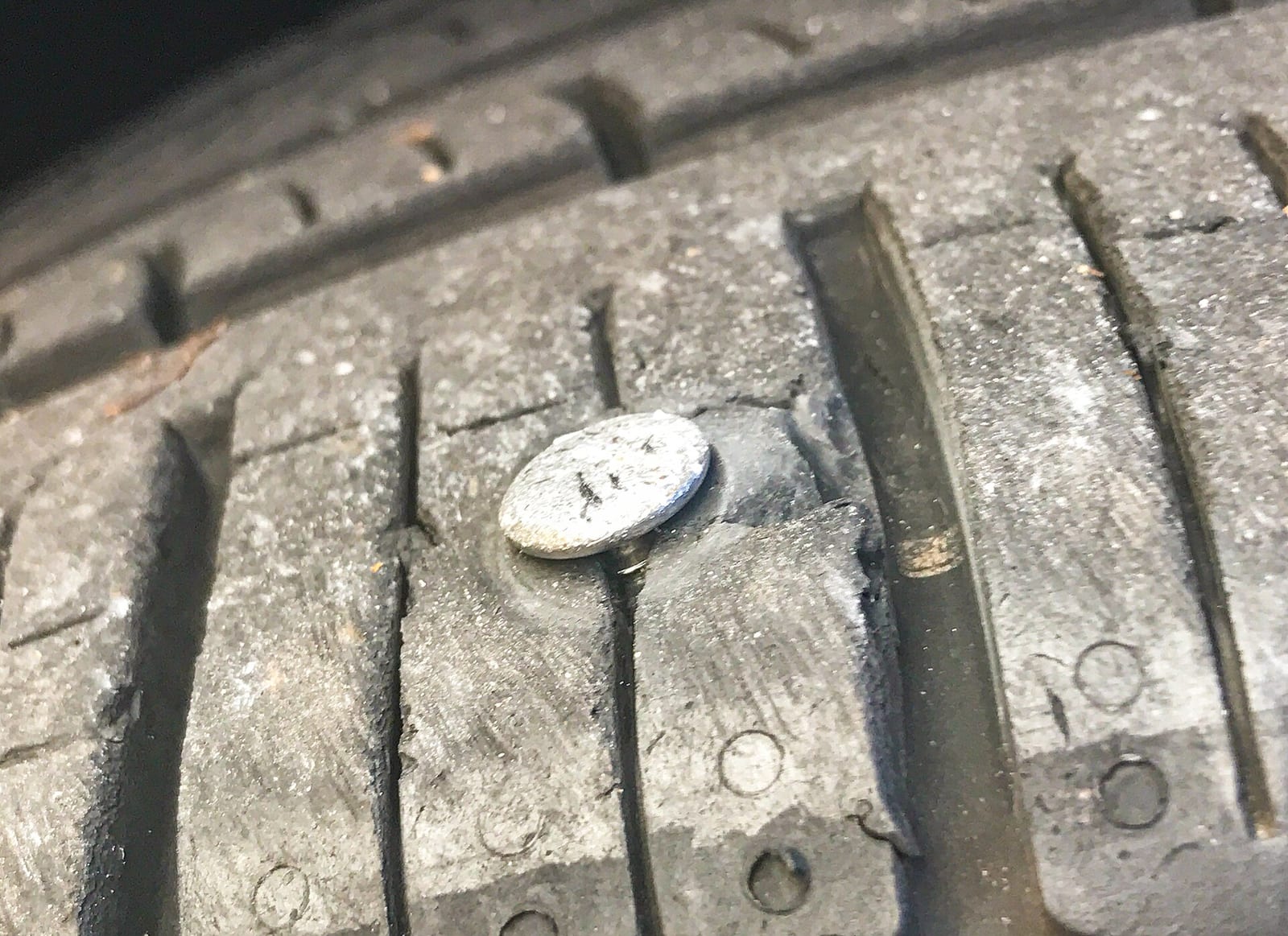
- A puncture in the tread up to 6 mm across can usually be repaired, if the tire wasn’t driven flat.
- Damage in the sidewall or shoulder means a new tire. So does a hole bigger than 6 mm.
- A proper repair is done from the inside. The tire comes off the wheel and gets a combined plug and patch.
When a puncture can be repaired
The industry repair procedures published by the U.S. Tire Manufacturers Association limit repairs to the tread area. The hole can be no more than 6 mm (1/4 inch) across. Damage that reaches the shoulder, where the tread curves into the sidewall, or the sidewall itself can’t be repaired.
Where the hole is matters as much as how big it is. A screw in the middle of the tread is a routine fix. The same screw near the edge of the tread may not be repairable. If you’re unsure, take a photo before you pull anything out and show it to the shop.
| Usually repairable | Replace the tire | |
|---|---|---|
| Location | Tread area | Shoulder or sidewall |
| Hole size | Up to 6 mm across | Larger than 6 mm, or a cut or tear |
| Driven flat? | No | Yes, or unknown damage inside |
| Earlier repairs | None nearby | Would overlap an old repair, or an old repair was done badly |
What a proper repair involves
A proper repair starts with taking the tire off the wheel so the technician can inspect the inside. Michelin says repairs of all tires must be a combined plug and inside patch. The plug fills the hole and the patch seals the inner liner. The USTMA procedures say a plug alone or a patch alone isn’t acceptable, and a tire should never be repaired from the outside while it’s still on the wheel.
That last point rules out the quick plug from a roadside kit as a permanent fix. A plug pushed in from outside can hold air, but nobody has checked the inside of the tire for damage. Treat it as a way to reach a shop, and ask the shop to redo it properly or replace the tire.
Run-flat tires and speed ratings
Run-flat tires are designed to keep you moving for a limited distance after losing pressure, and that changes the repair rules. Bridgestone says a run-flat that was driven at less than 15 psi can’t be repaired. Michelin says run-flats usually can’t be repaired once they’ve lost pressure. Goodyear allows them to be repaired in the same way as other tires.
A repair can also affect a tire’s speed rating. Bridgestone voids the speed rating of any repaired tire. Goodyear lets an H-rated or higher tire keep its rating after one proper repair. Ask what applies to your brand, and match the tire to the others on the car if the speed rating is lost.
The tire shop directory shows which Abbotsford-area shops list flat repair on their websites. Ask each one how they repair a puncture before you book.
If you get a flat on the highway
ICBC’s advice is to signal or switch on your hazard lights and pull off the road as soon as it’s safe. It also warns against doing roadside repairs on crowded, fast-moving freeways. On Highway 1 through Abbotsford, that usually means getting as far from traffic as you can and calling for roadside assistance rather than changing the tire beside the live lane.
If you fit a compact spare, read the limits on its sidewall and in the owner’s manual. Michelin Canada says these spares typically have a maximum speed of 80 km/h and a distance limit of about 100 to 200 km. They’re meant to get you to a shop, not through the week.
Sealant kits and tire pressure sensors
Some cars come with a sealant and inflator kit instead of a spare. Industry procedures treat sealant as temporary mobility, not a repair. Bridgestone says a tire injected with sealant must be replaced as soon as possible, and that sealant voids its tire warranty.
Sealant can also reach the tire pressure sensor inside the wheel. A General Motors service bulletin says the sensor should be inspected and cleaned or replaced after an inflator kit is used. Tell the shop you’ve used sealant when you book, so they can plan for the cleanup and any sensor work.
Questions people ask
Can I plug a tire myself?
A plug kit can get you to a shop, but it isn't a proper repair. Industry procedures say a tire must never be repaired from the outside or while it's still on the wheel, and a plug on its own isn't acceptable. Have the tire taken off and repaired properly from the inside, or replaced.
How many times can a tire be repaired?
Repairs can't overlap, and the rules vary by manufacturer. Goodyear, for example, allows one proper puncture repair on an H-rated or higher tire if the tire is to keep its speed rating. Bridgestone treats any repaired tire as having no speed rating. Ask the shop what the maker of your tire allows.
My tire pressure light came on but the tire looks fine. What should I do?
Check all four tires with a gauge when they're cold and compare them with the pressures on the driver's door-jamb placard. A tire that reads lower than the others may have a slow leak from a nail or screw, even if it looks fine. If one tire keeps losing air, have it removed and inspected.
Is a tire with sealant in it ruined?
Not always, but it needs attention soon. Bridgestone says a tire injected with sealant must be replaced as soon as possible, and sealant voids its tire warranty. Other makers may allow a repair once the sealant is cleaned out. Either way, the tire pressure sensor should be checked.
- U.S. Tire Manufacturers Association — Puncture repair procedures for passenger and light truck tires. ustires.org
- Michelin — Can my tire be repaired? michelinman.com
- Goodyear — Product service bulletin 2022-11, Proper tire repair for auto and light truck tires. goodyear.com
- Bridgestone/Firestone Canada — Tire maintenance and safety manual. bridgestonetire.com
- Michelin — Run-flat tires. michelinman.com
- Michelin Canada — Spare tires. michelin.ca
- General Motors — Service bulletin 09-03-10-013B, tire sealant and pressure sensors. nhtsa.gov
- ICBC — Learn to Drive Smart, chapter 8. icbc.com
- Government of BC — Slow Down, Move Over. gov.bc.ca


_02.jpg)
.jpg)
_-_panoramio.jpg)


.jpg)
